
RIC vs BTE Hearing Aids: What Is the Difference?
September 5, 2026 · By Hearing Comforts Clinical Team · 7 min read
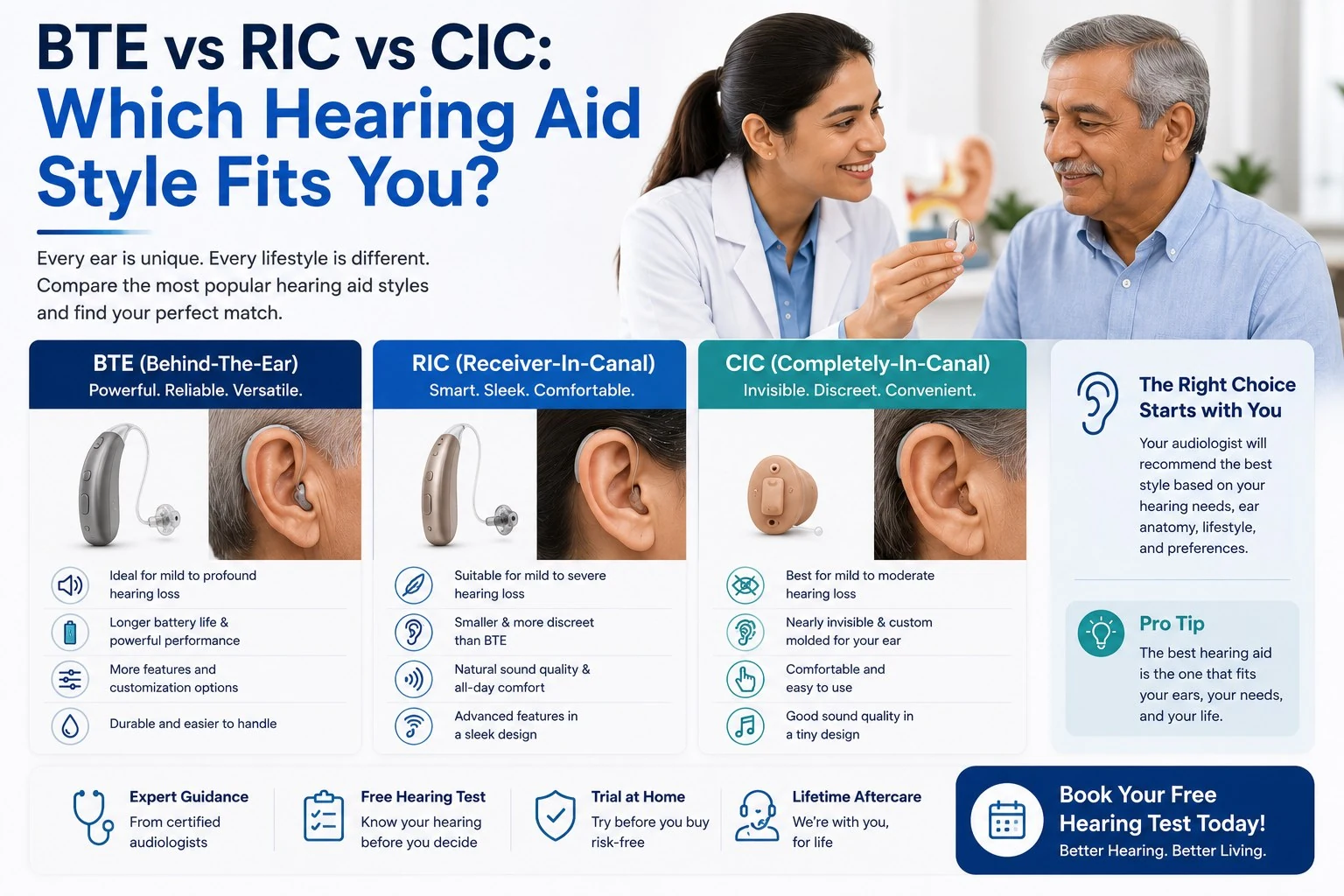
RIC vs BTE is an important comparison when choosing a behind-the-ear hearing aid. Both designs sit partly behind the ear, but the receiver placement is different. That difference can affect size, power, comfort, maintenance and the overall listening experience.
Helpful next steps
Explore RIC Hearing Aids → · Explore BTE Hearing Aids → · Compare BTE, RIC & CIC →
In this guide
What is a RIC hearing aid?
RIC stands for Receiver-in-Canal. The main body sits behind the ear while the receiver is placed in or near the ear canal. A thin wire connects the receiver to the hearing aid body. RIC devices are popular because they can offer a relatively discreet design with a range of modern features.
What is a BTE hearing aid?
BTE stands for Behind-the-Ear. The electronics and receiver are housed in a casing behind the ear, with sound delivered through tubing or an earmold depending on the design. BTE hearing aids can be suitable across a broad range of hearing losses, including cases where more power is required.
RIC vs BTE: practical comparison
| Factor | RIC | BTE |
|---|---|---|
| Receiver | In/near ear canal | Typically in the behind-ear housing or connected via tubing |
| Appearance | Often slim/discreet | Can be more visible, depending on power and casing |
| Power | Varies by model | Broad range, including powerful options |
| Handling | Small receiver and wire | Often easier to see and handle for some users |
| Suitability | Depends on hearing loss and ear anatomy | Suitable for a wide range of hearing losses |
Which is more comfortable?
Comfort depends on the fit, dome or earmold, receiver size, ear anatomy and programming. A RIC may feel open and lightweight for some users, while a BTE with an appropriate earmold can provide a secure fit when more power or retention is needed.
Which should you choose?
If you value a slim behind-the-ear design and your hearing profile suits it, RIC may be a strong option. If you need more power, easier handling or a particular earmold configuration, BTE may be more appropriate. The audiogram should come before the style preference.
Frequently Asked Questions
Is RIC better than BTE?
Neither is universally better. RIC may offer a slim design and receiver-in-canal configuration, while BTE can offer a broad range of power and fitting options.
Is BTE suitable for severe hearing loss?
BTE hearing aids are used for a wide range of hearing losses, including more severe losses. The exact model and power level must match the hearing assessment.
Are RIC hearing aids easier to maintain?
Maintenance depends on the model. RIC receivers, domes and wax filters need regular attention, while BTE systems may use tubing or earmolds that also require cleaning and service.
Related Hearing Care Resources
Need help choosing the right hearing aid?
Start with a hearing test and discuss suitable options with a hearing-care professional.